Empty rooms don't sell themselves
A 0→1 AI room visualization app built solo in evening sessions — from a personal problem to a tested MVP for real estate agents, shipped in under three months.
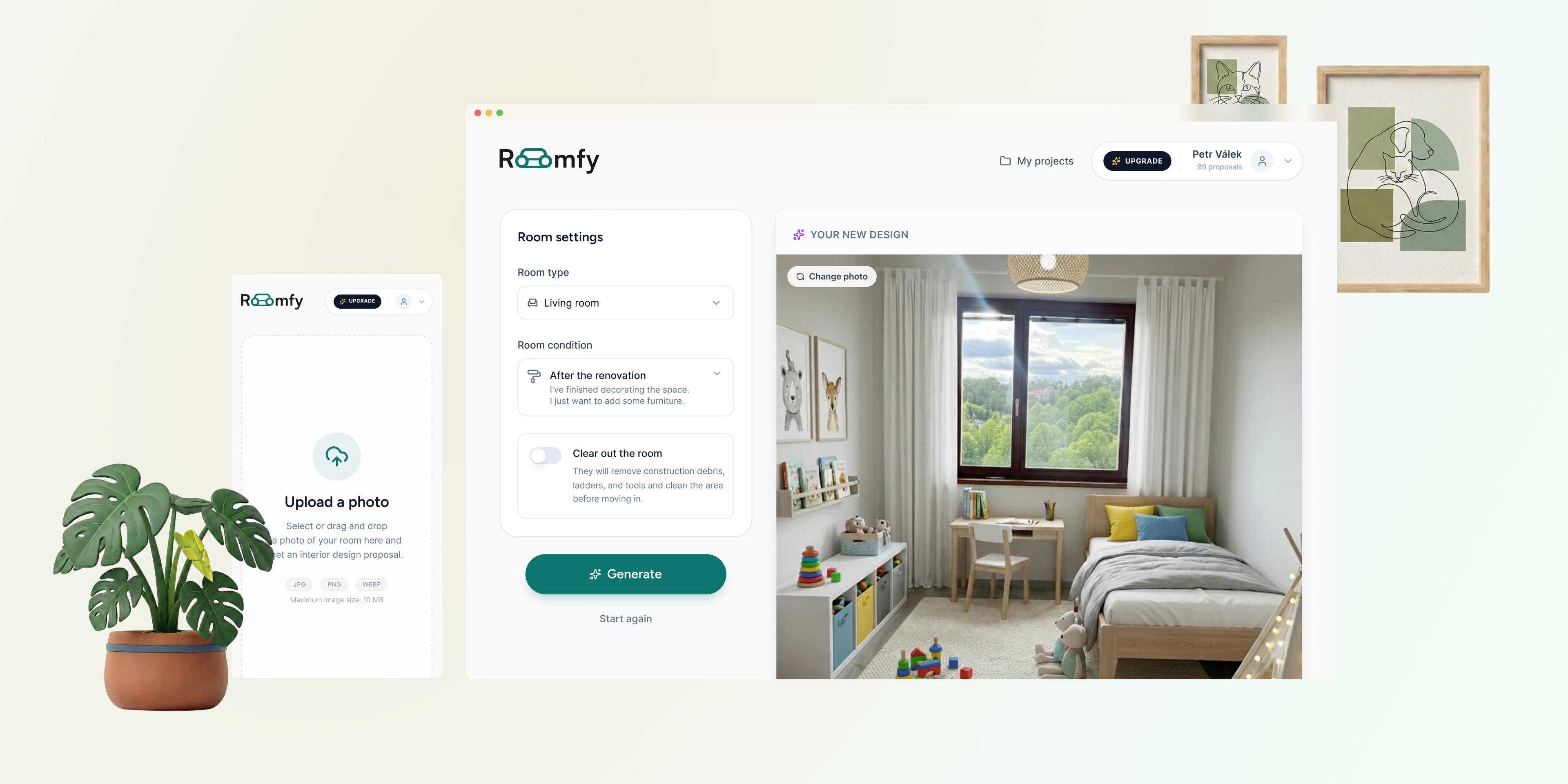
My parents were renovating. They wanted to imagine what their new rooms could look like — but every tool available was either too complex, too expensive, or designed for professionals. AI chat tools were even worse: too open-ended, too slow, too many hallucinations.
I built Roomfy in evening sessions over three months to solve that exact problem. What started as a personal experiment became a tested MVP for real estate agents selling empty flats — and one of the most educational projects I've shipped.
Role & Scope
This was a solo 0→1 project. I owned everything — product thinking, UX design in Figma, and vibe-coded development. My friend, a non-technical professional new to AI tools, acted as an informal UX researcher: first user, first interviewer, and a direct stand-in for the non-expert audience I was designing for.
Research & Discovery
I ran a lightweight competitive audit early on. VirtualStagingAI and RoomGPT both solve a similar problem — but they're cluttered, professionally oriented, and assume a level of intent that casual users don't have. Neither felt like something my parents would open on a phone.
The first real research moment was showing the prototype to a friend — no IT background, just starting to explore AI tools. He understood it immediately and wanted to use it. That reaction told me the simplicity was working.
From there, we identified real estate agents as a natural audience: they regularly photograph empty or outdated flats and need to help buyers imagine the space. Three deep-dive conversations with agents confirmed their workflow and pain points — and validated that a simple, fast, mobile-friendly tool had a real place in their day.
Every tool is too complex
“Why do I need to upload a floor plan just to see a sofa?”
UserAI makes rooms look unreal
“The ceiling height is completely wrong.”
TechnicalI need this on-site
“By the time I'm back at my laptop, the client has moved on.”
WorkflowOpen prompts = unpredictable results
TechnicalVisualization from design studio is expensive
MarketThe Challenge
“How might we give non-technical users a way to visualize an empty room — in seconds, with almost no input?”
The Pivot
The original problem was personal — renovation visualization for non-technical users. The pivot came from a single conversation: real estate agents have the same problem at scale. They sell empty spaces daily, and the gap between "empty room photo" and "buyer can imagine living here" is exactly where Roomfy fits.
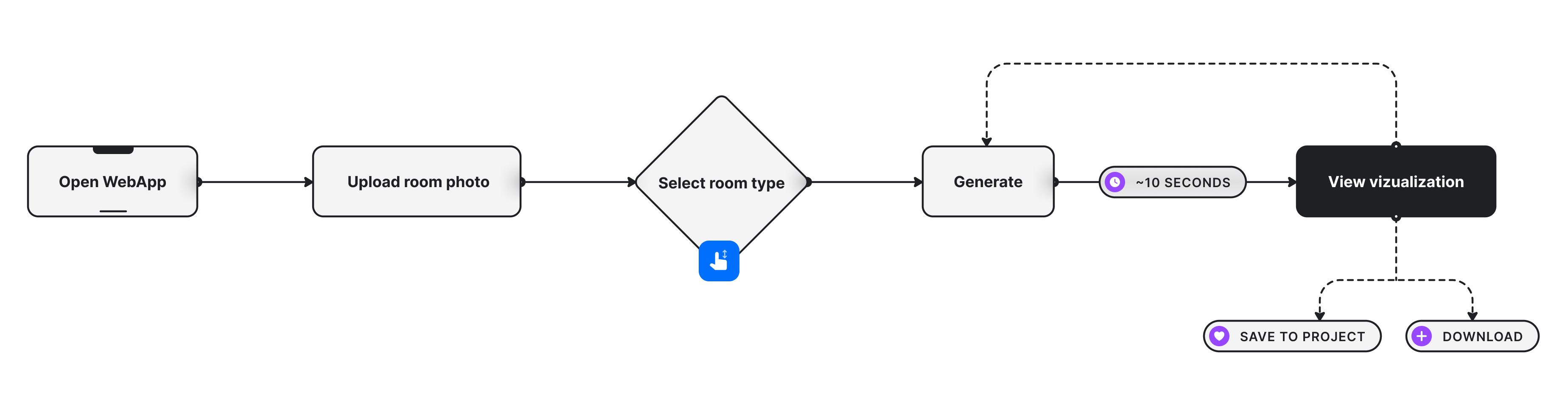
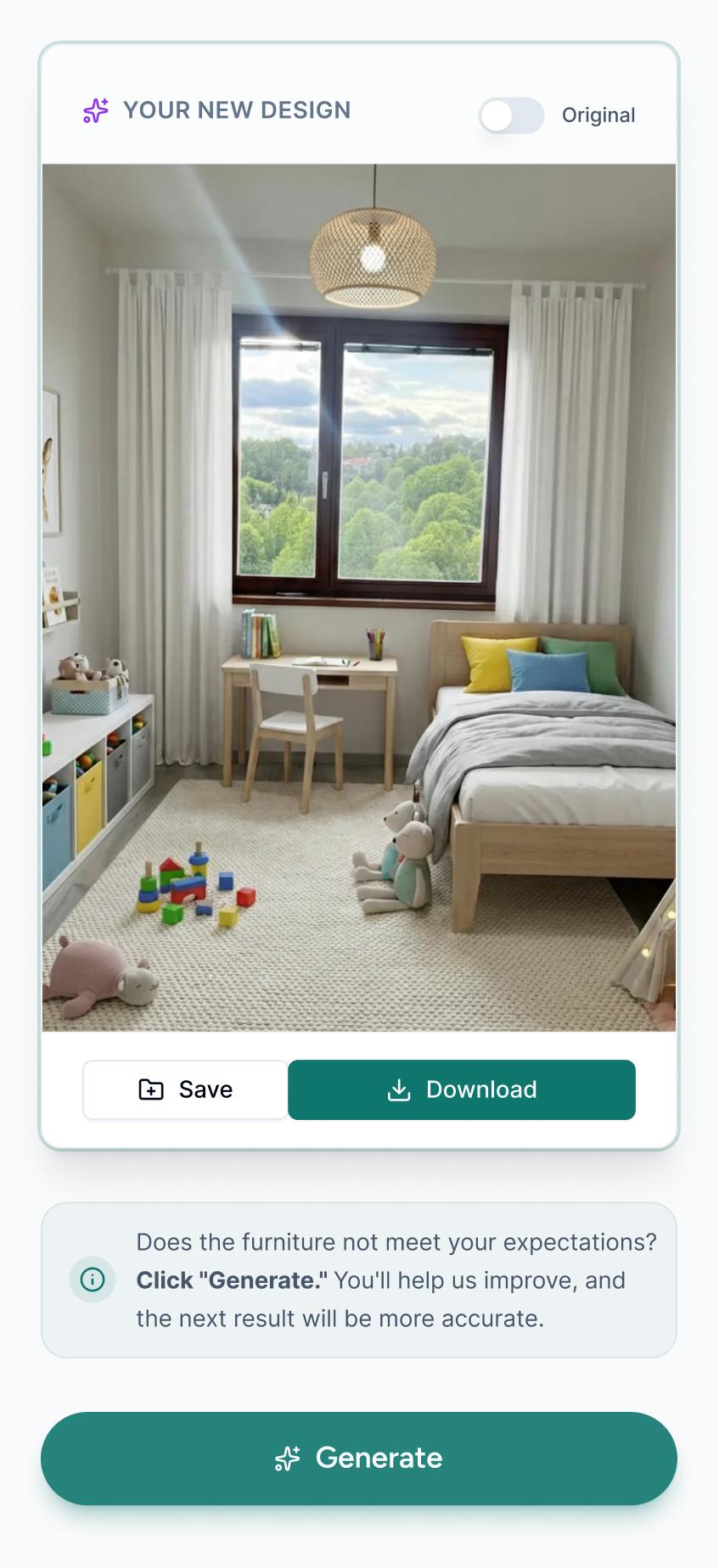
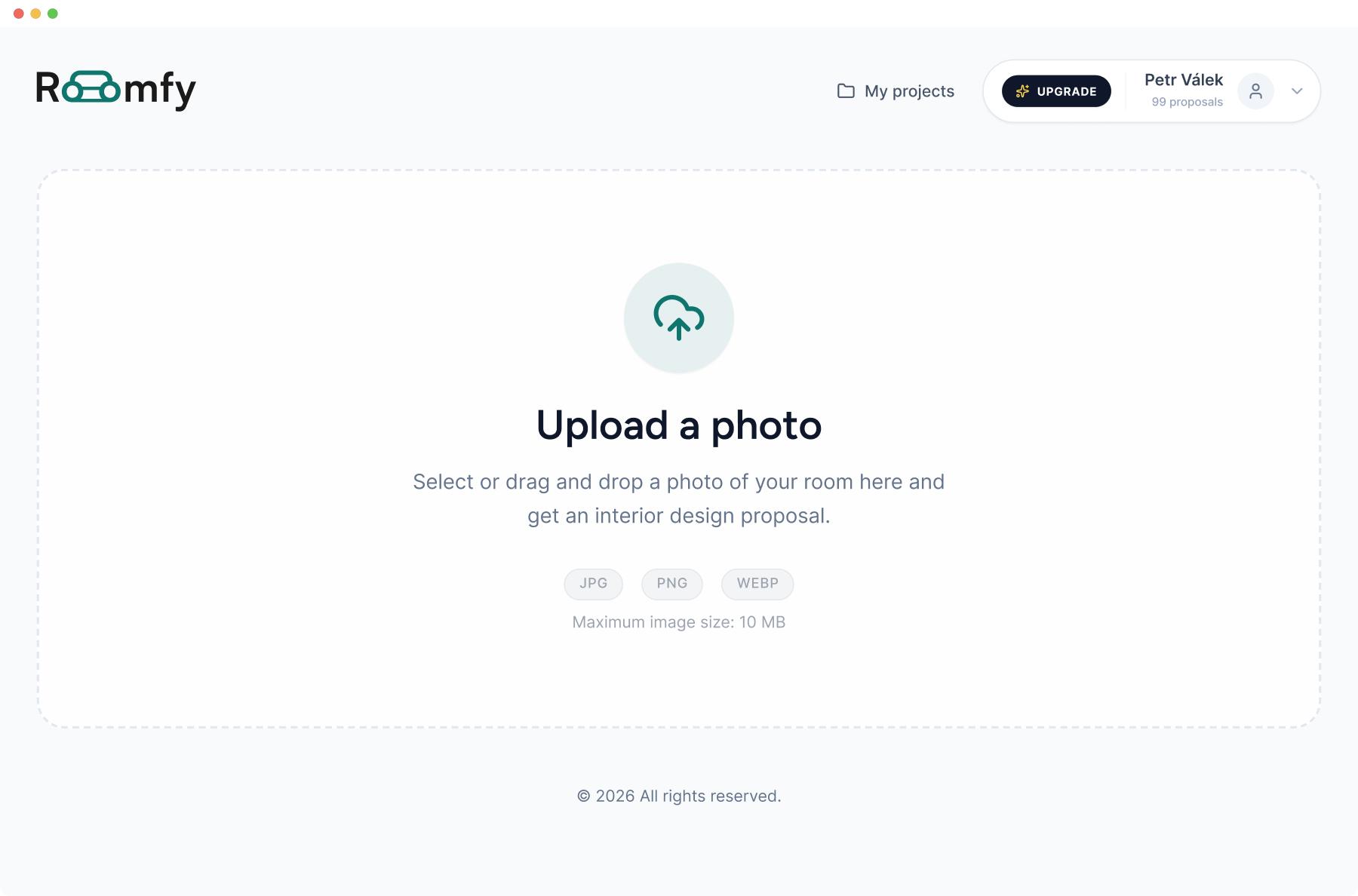
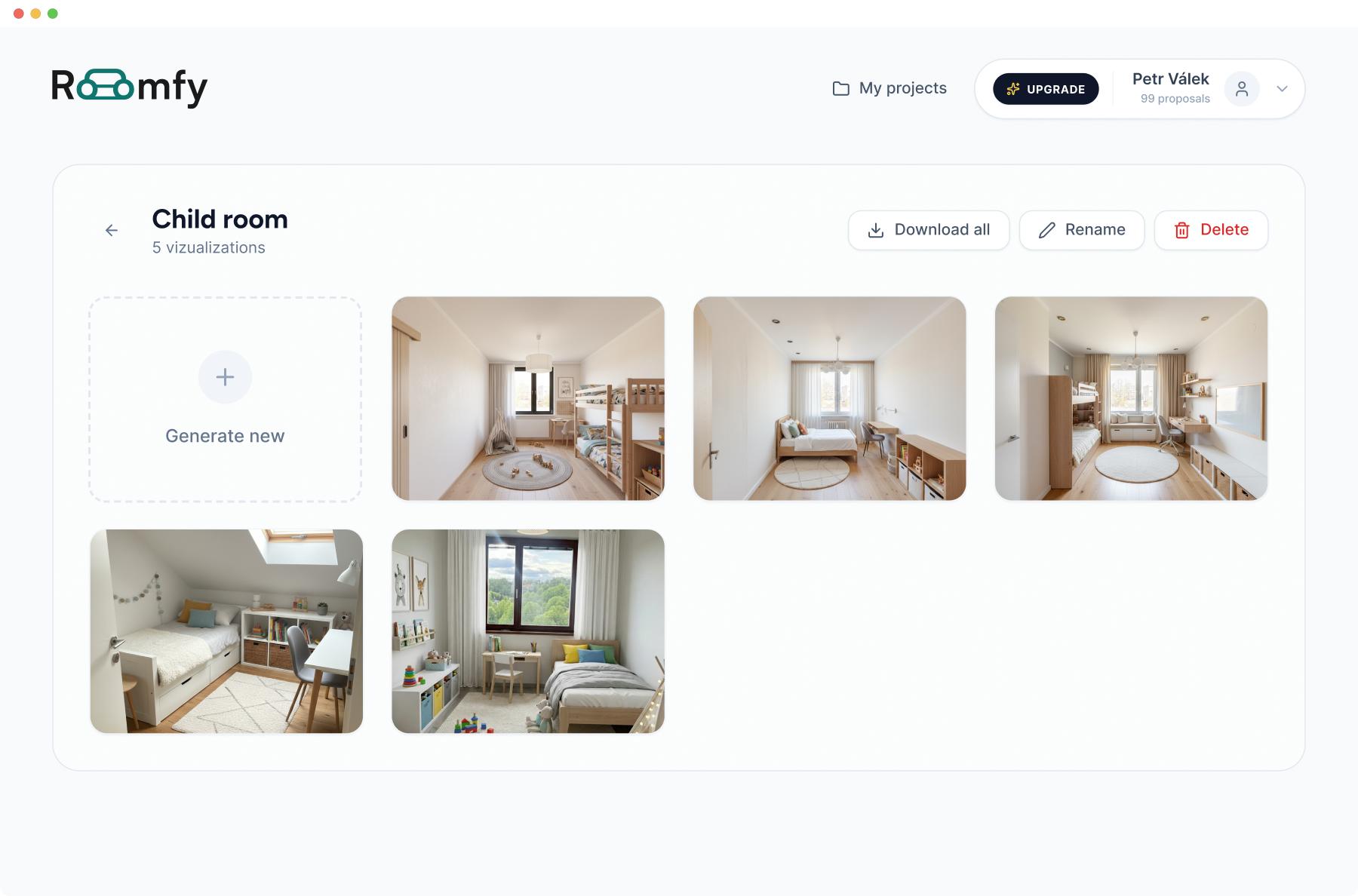
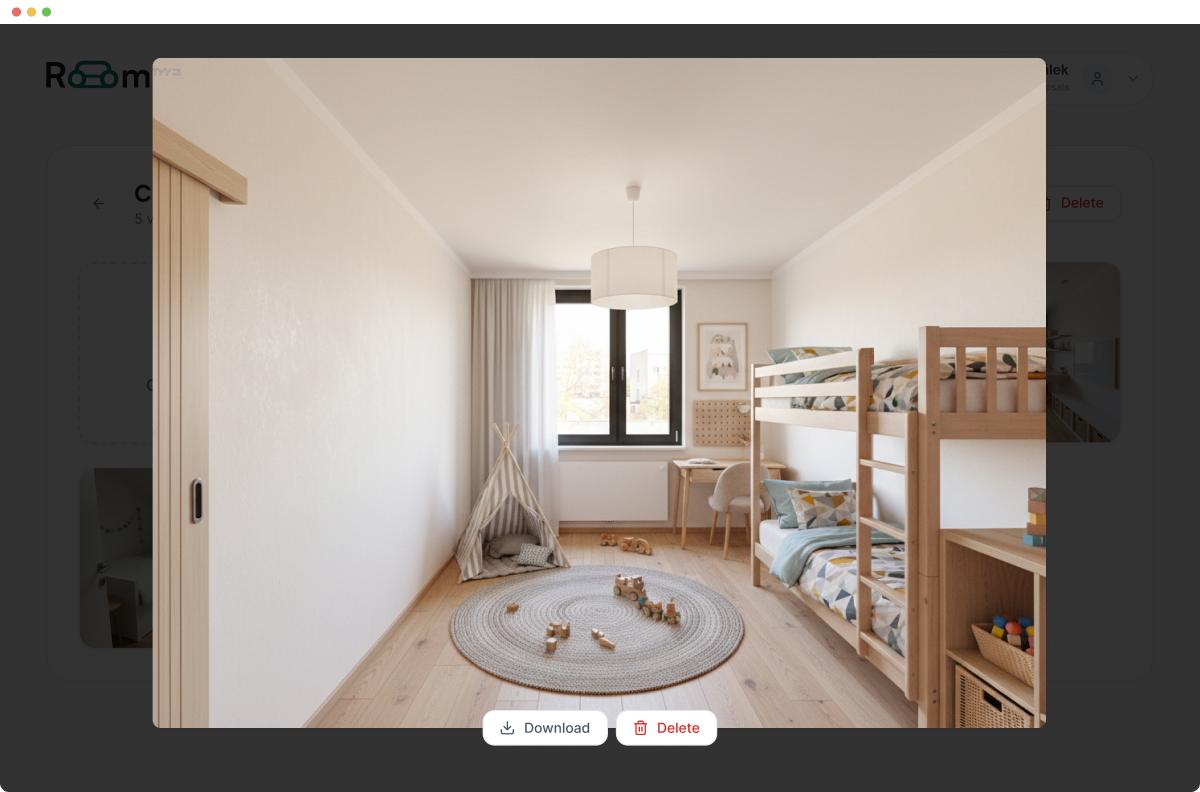
This reframe sharpened everything. The audience was defined. The use case was concrete. The workflow became: agent opens the app on-site, uploads a photo from their phone, selects the room type, generates a visualization in 10 seconds, shares with a client. No desktop required. No account setup friction. No AI prompt writing.
Design Decisions
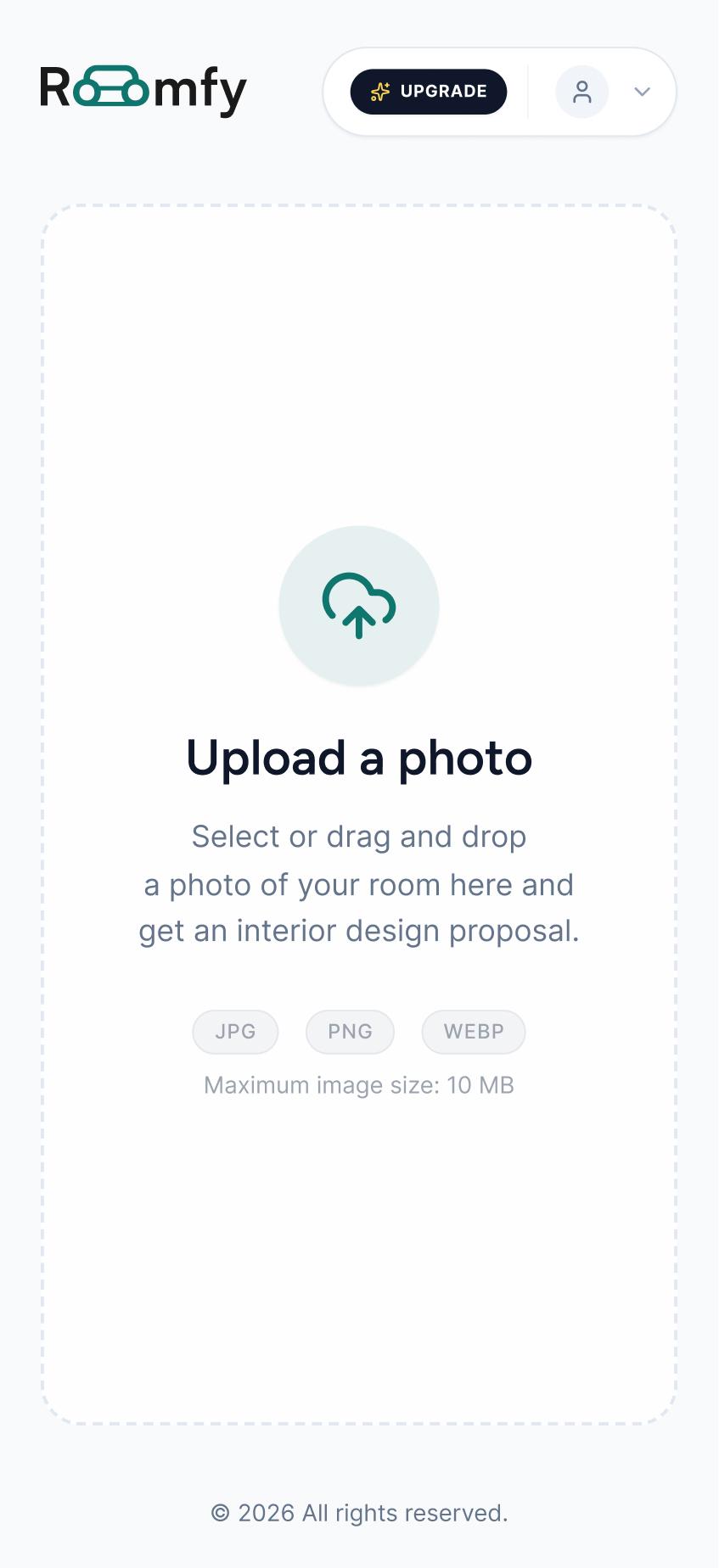
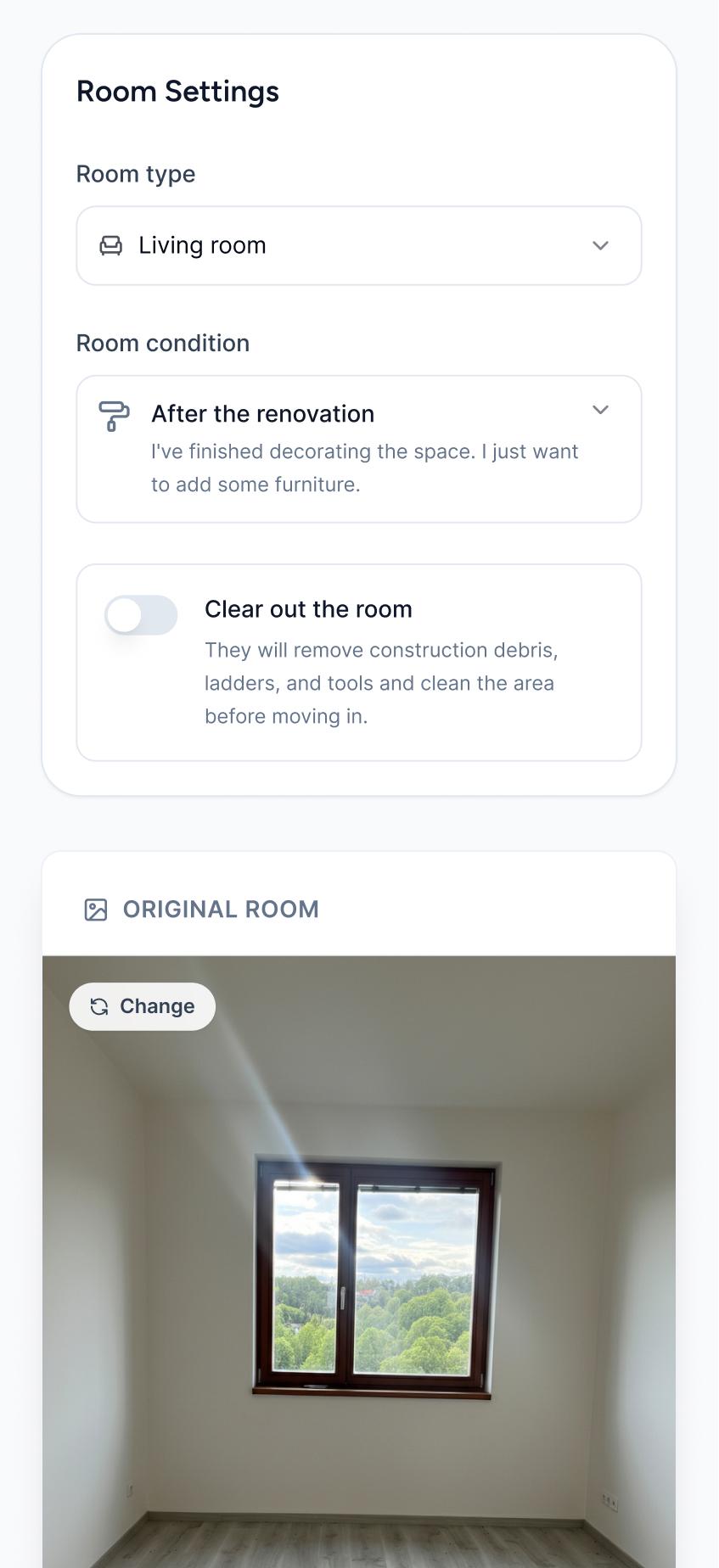
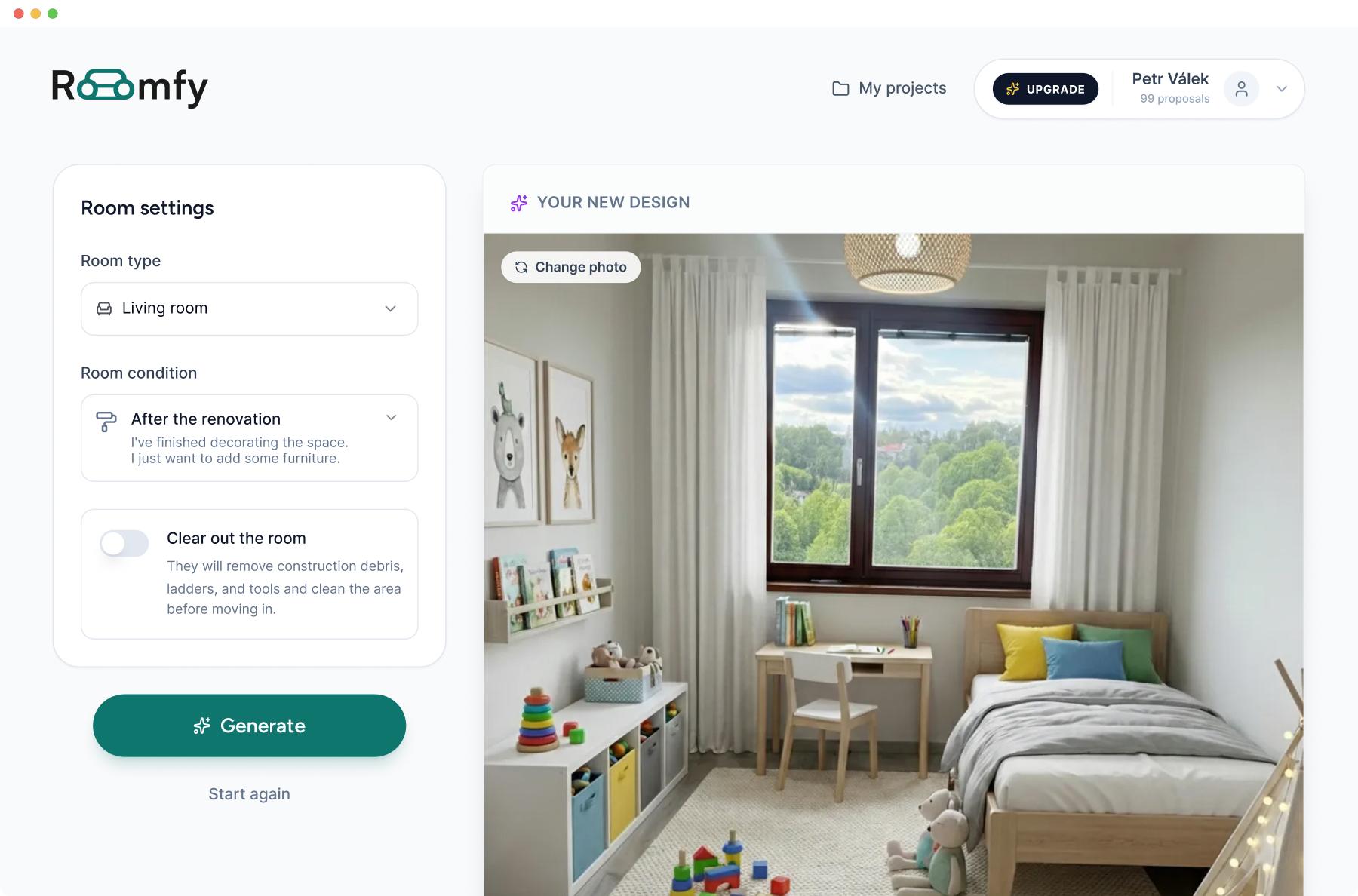
The biggest UX decision was removing creative freedom. Instead of asking users to describe what they wanted, I gave them a small set of choices: room type (living room, kitchen, child's room, bedroom, and a few others). That's it. One upload, one selection, one button.
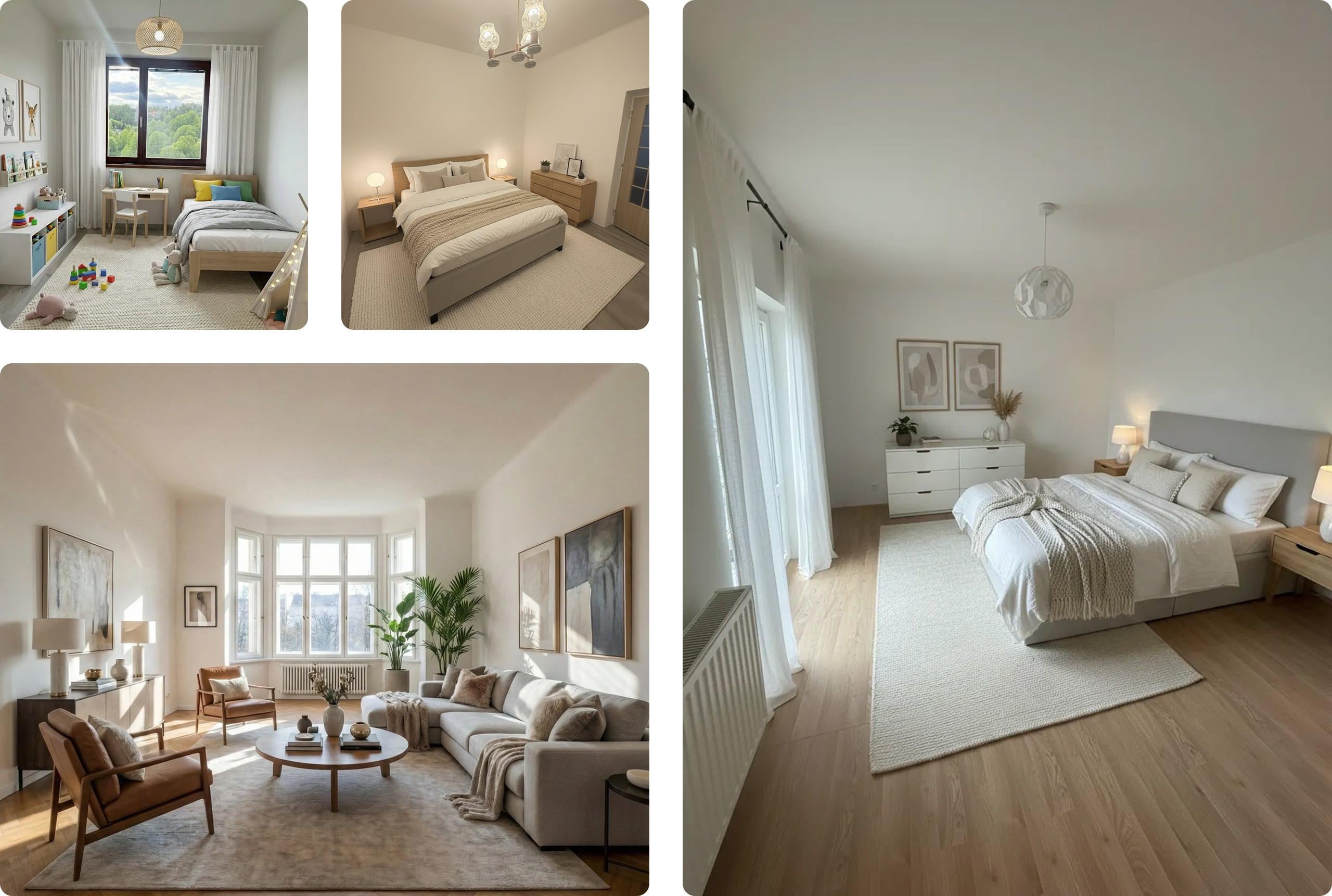
This directly addressed the hallucination problem. Open prompts produce unpredictable results. Constrained inputs let me tune the AI prompts in the app's backend to stay within a narrow, reliable visual range — furniture that fits the room type, lighting that matches the photo, proportions that don't feel wrong.
Mobile-first was non-negotiable. The real test was in an actual flat: open the app, photograph the room, generate. The 10-second generation window was the UX constraint I optimized everything else around.
Technical Challenge
The hardest problem wasn't the interface — it was AI accuracy. The initial model (ChatGPT image generation) consistently misread room dimensions and perspective. Furniture floated. Proportions were wrong. The room didn't feel real.
After testing alternatives, Gemini Flash Image became the clear winner for this use case. Combined with carefully tuned prompt engineering in the app's backend explicitly encoding perspective cues, scale anchors, and room-type constraints. Accuracy reached roughly 90%. The remaining 10% are edge cases: unusual angles, very small rooms, heavy natural light.
This directly shaped the pricing model thinking: API costs per generation are real, which means credits and usage tiers need to reflect actual model costs — not just be a growth mechanic.
Testing & Iteration
Testing happened in two layers. The first was qualitative — guerrilla sessions outside formal interviews, showing the app to people in context and watching what they did. The core question wasn't "do you like it" but "how did you use it."
The second layer was instrumented: Microsoft Clarity session recordings running in the background, capturing real usage without prompting. This combination — observed behavior plus recorded behavior — gave a clearer picture of where users hesitated, what they expected, and what confused them.
The live test in a real flat was the most grounding moment. A real room, a real phone, a real agent workflow. It worked.
Impact
~10s
Generation time
Mobile, on-site, real-world tested
90%
AI accuracy
After prompt engineering iteration
3
Agent interviews
Plus parents, friend, and guerrilla sessions
Reflection
This project was one of the most enjoyable things I've built. It was fast, educational, and tested almost every skill I have — product thinking, UX design, prototyping, research, and technical problem-solving in one tight loop.
But I'm honest about where it stands. Gemini and other large AI platforms now offer better image visualization inside a general subscription. Real estate agents can get "good enough" results from tools they're already paying for. Competing on cost against Google's API pricing isn't a game a bootstrapped product wins.
What I'd do differently: investigate the pricing model and competitive landscape harder before investing in the MVP. The insight about API costs and usage-based pricing came late — it should have been a first-week question, not a post-MVP one.
What I learned: constrained AI inputs beat open-ended prompts for non-expert users, every time. And the right research conversation can reshape an entire product direction in one afternoon.
What stays open: whether there's a defensible niche — agencies, property developers, interior consultants — where Roomfy's simplicity and speed justify a standalone product at the right price point.