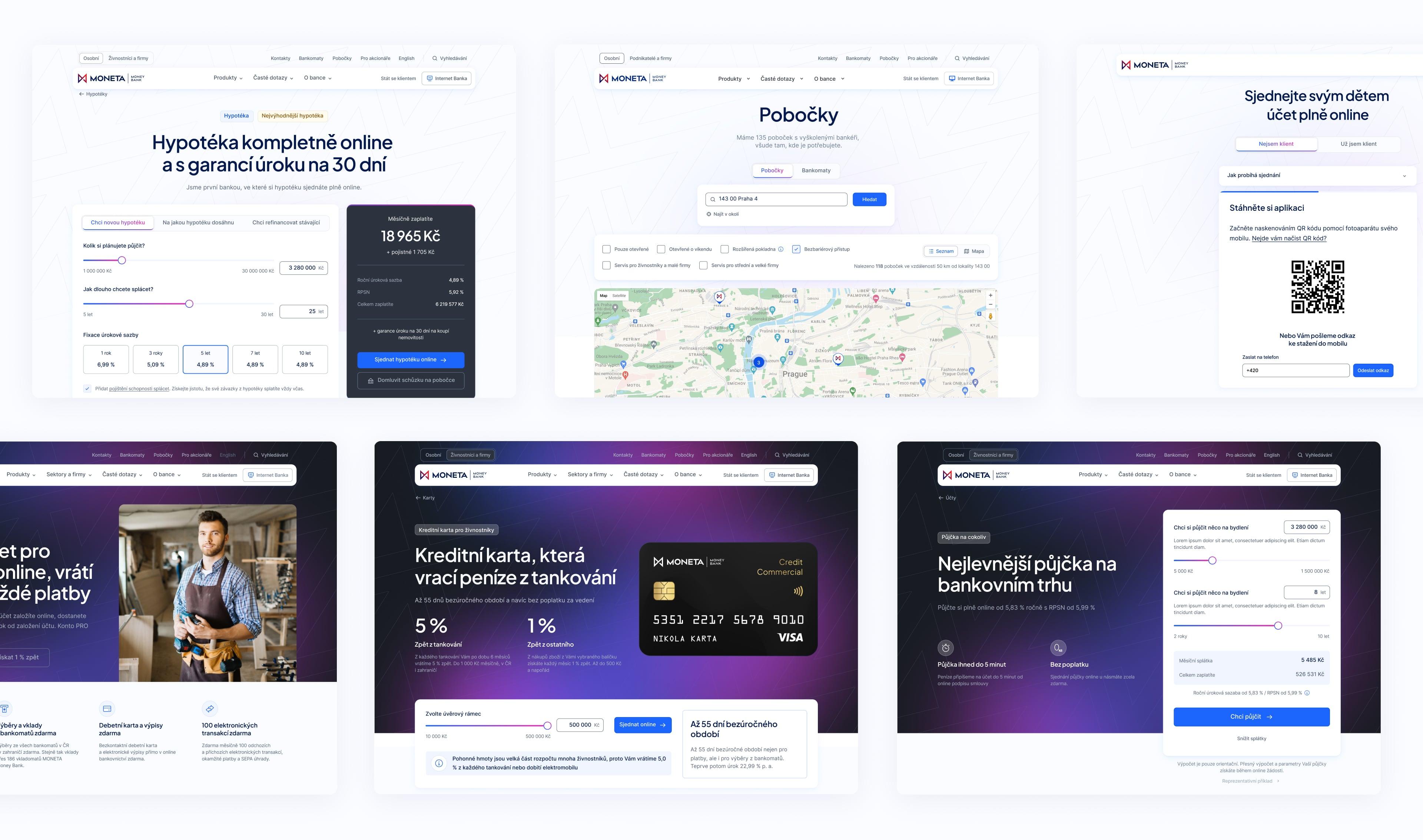
Redesign a successful banking portal in months
Redesigning one of the Czech Republic's largest banking websites across 7,000+ URLs, five subwebs, and a full Design Thinking process — shipped in 8 months.
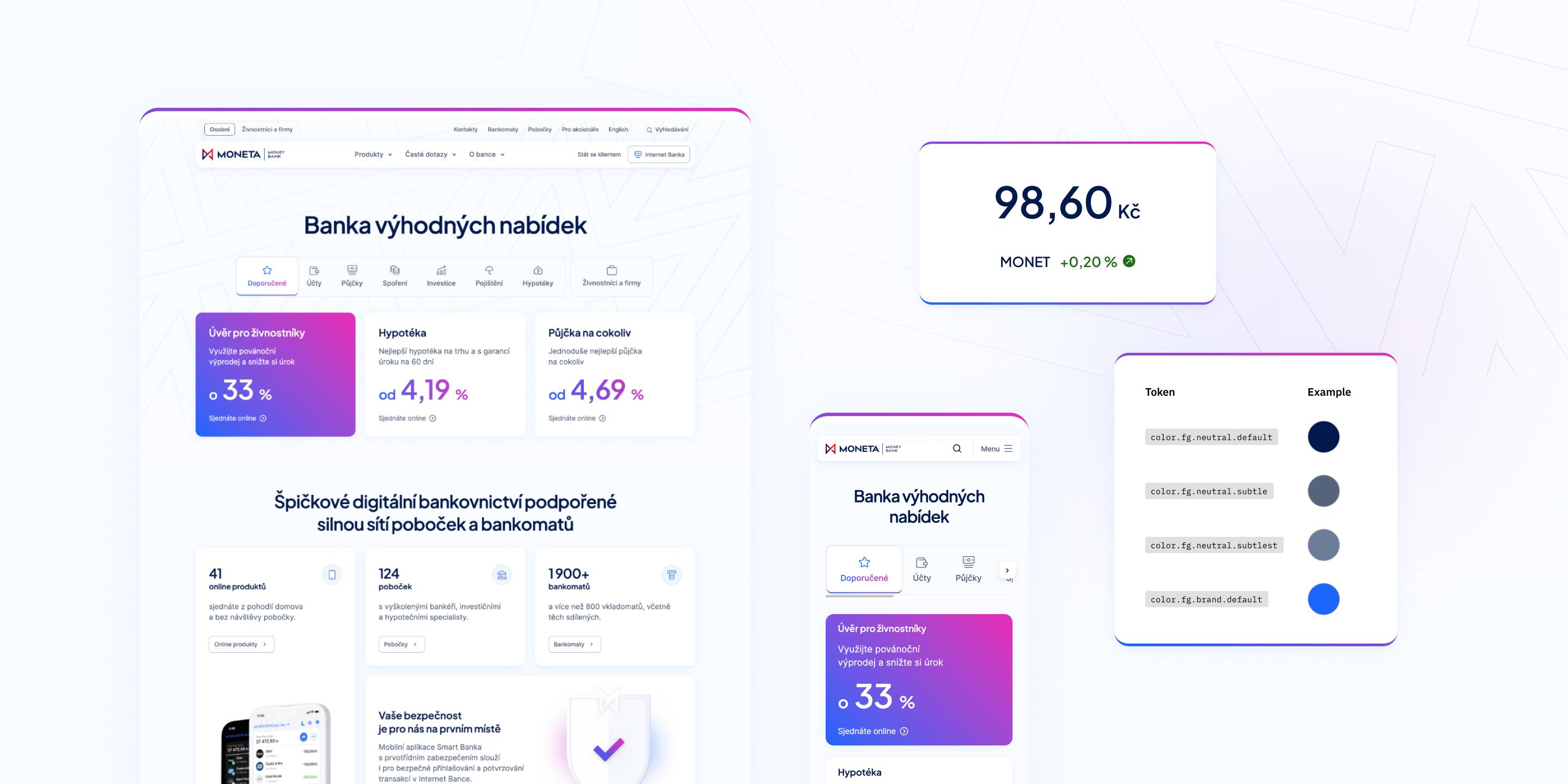
Moneta Money Bank serves hundreds of thousands of clients online daily. But the website had accumulated years of structural debt — fragmented navigation, unclear product pages, and an experience that no longer matched how people actually make financial decisions.
We were brought in to fix it: 7,000+ pages, five subwebs, and eight months to ship.
Role & Scope
My work split across two distinct phases. In discovery, I mapped unique user flows across Moneta's most complex product areas — insurance, mortgages, and other specialized verticals. In delivery, I led the creation of a unified web design system for Liferay CMS, consolidating three independent design foundations into one source of truth.
The Challenge
“How might we rebuild Moneta's digital experience from the user's intent outward — not from the bank's internal structure?”
Research & Discovery
300+ usability sessions in an in-house UX lab. 1,000+ pieces of live feedback. 10,000+ session recordings. Adobe Analytics across all 7,000+ URLs.
Three findings shaped everything: users consistently lost confidence mid-flow, the most common support queries exposed critical information gaps on key pages, and mobile drop-off was disproportionately high.
The pivot came when we cross-referenced heatmaps with analytics funnels. Users were reaching the right pages — they just couldn't trust or act on what they found. Navigation was a red herring. Content clarity and hierarchy were the real problem.
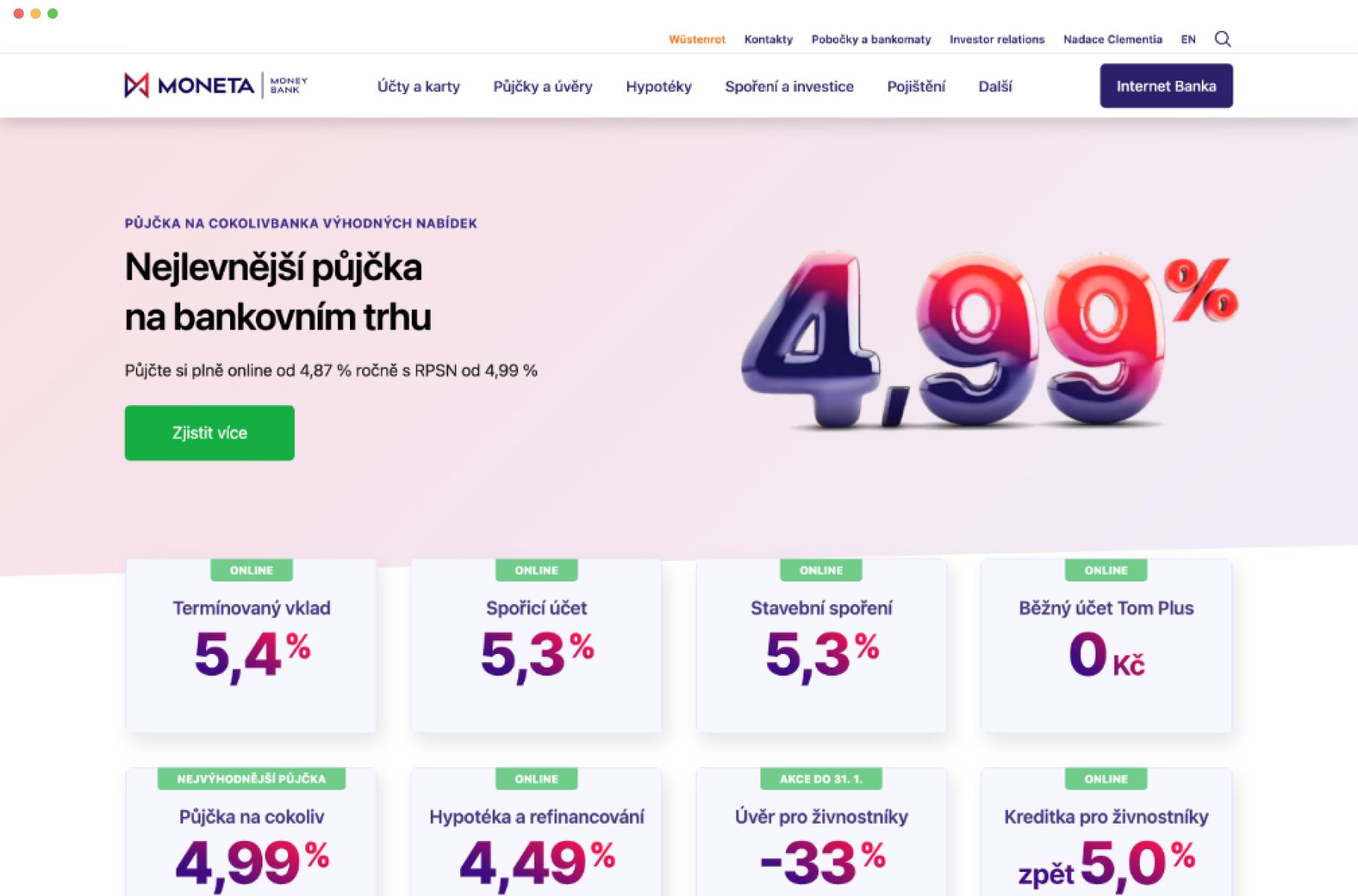
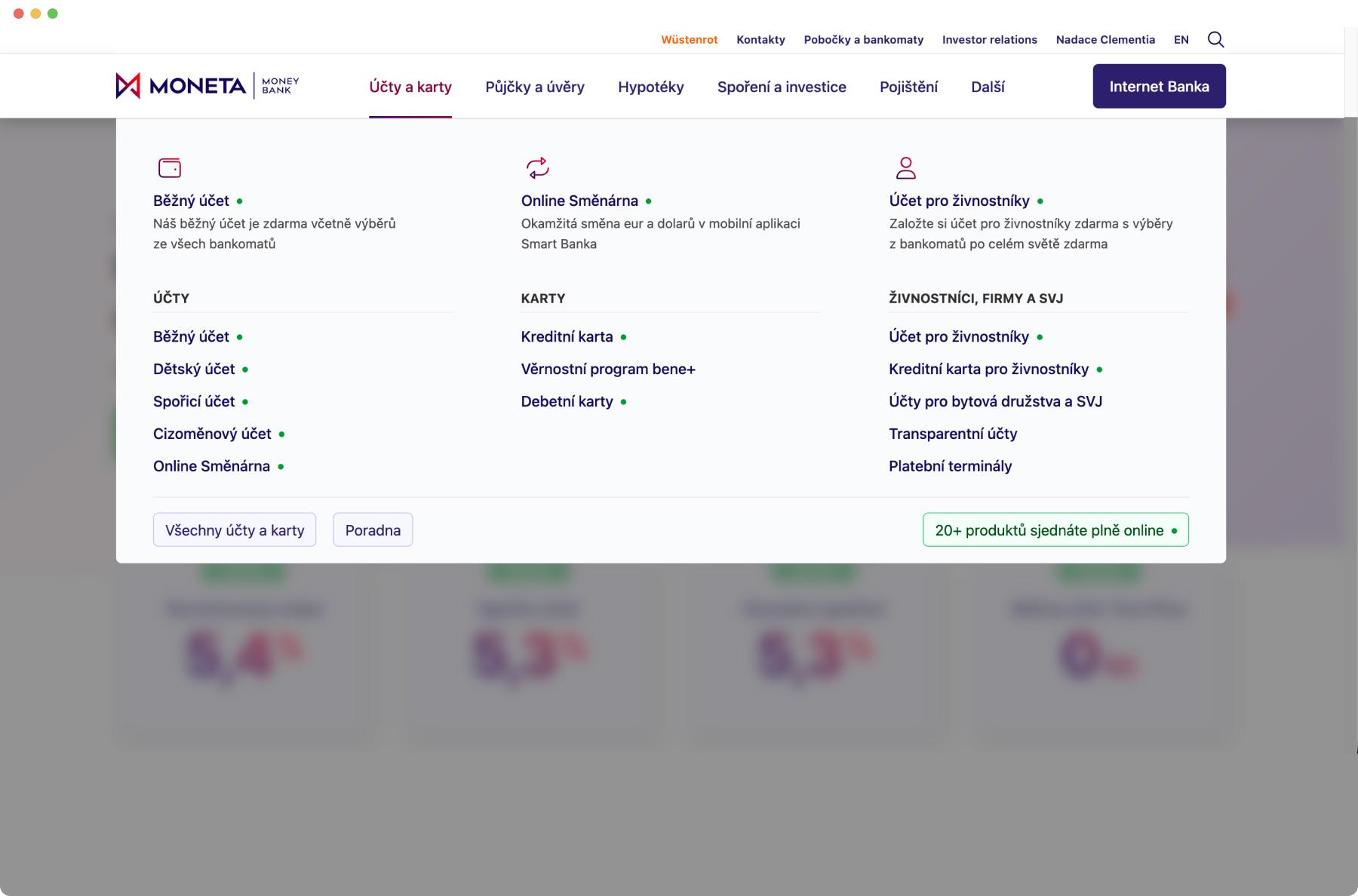
Screenshots of old web portal.
Research Insights
Across 300+ sessions and 10,000 recordings, the same patterns surfaced regardless of product type or user journey.
Confidence collapses mid-flow
“I found the page but still wasn't sure this was the right product for me.”
UserMobile users drop off disproportionately
UserSupport queries mirror content gaps
“People were calling about things that should have been answered on the page.”
WorkflowThree design systems, zero consistency
TechnicalBank structure drives navigation logic
“Users search by their need, not by our product category.”
WorkflowInsurance & mortgage journeys need unique decision stages
UserOnboarding flows bleed users at every step
“I started the application but gave up halfway — I wasn't sure what I'd need.”
WorkflowBrand refresh not reflected across digital
MarketNew vs. existing clients treated identically
“I'm already a client — why am I being shown acquisition content?”
UserWeb portal visually outdated
MarketProblem Framing
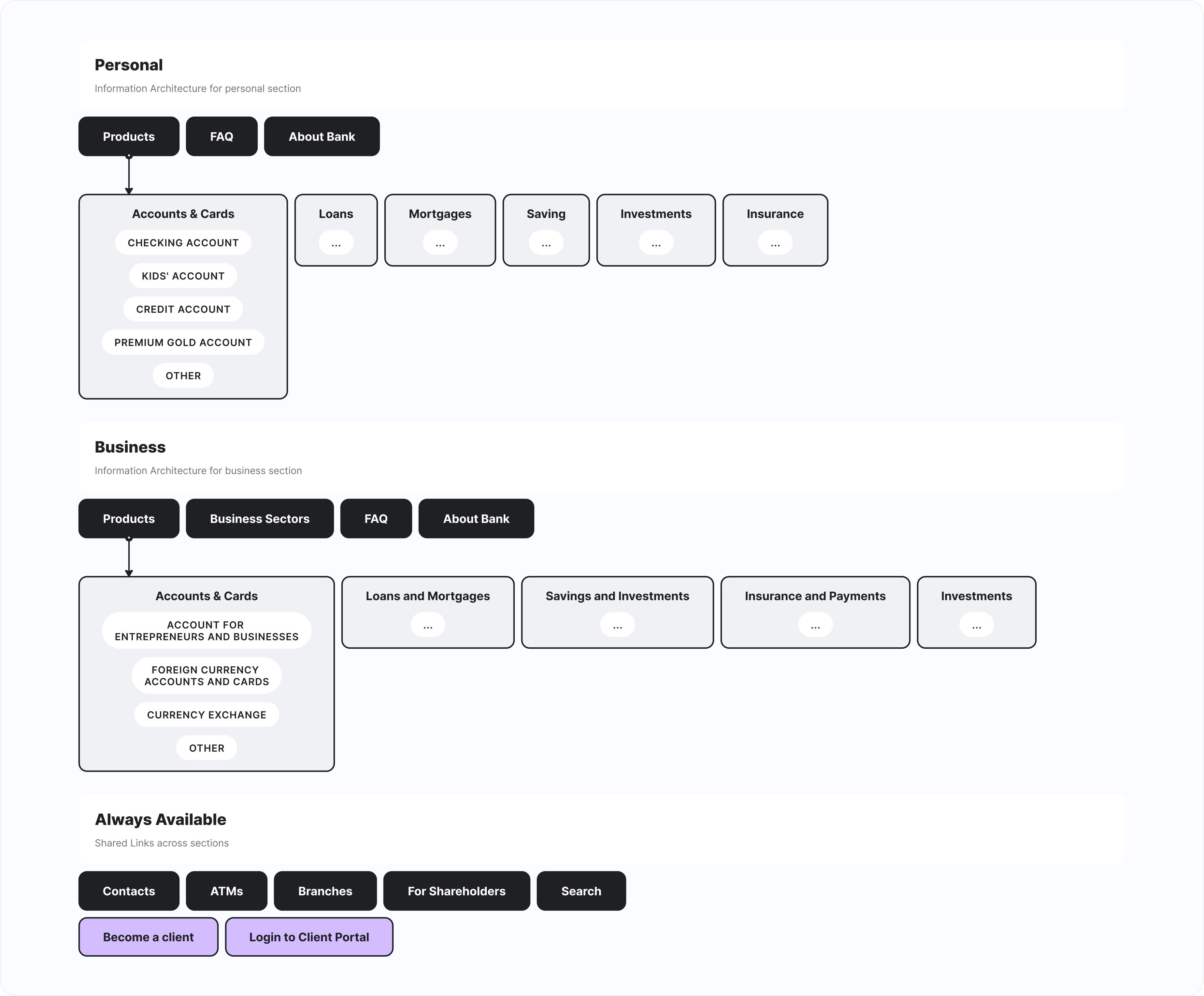
The original navigation was built for a simpler product range. But Moneta had grown — personal clients, sole traders, and a rapidly expanding business segment all sharing the same structure. Products blurred together, audience paths crossed, and what worked for one group actively confused another.
The nav wasn't broken in isolation. It had simply never been designed to serve two fundamentally different audiences at once.** That distinction personal vs. business became the structural fault line everything else was built around.**
Design Decisions
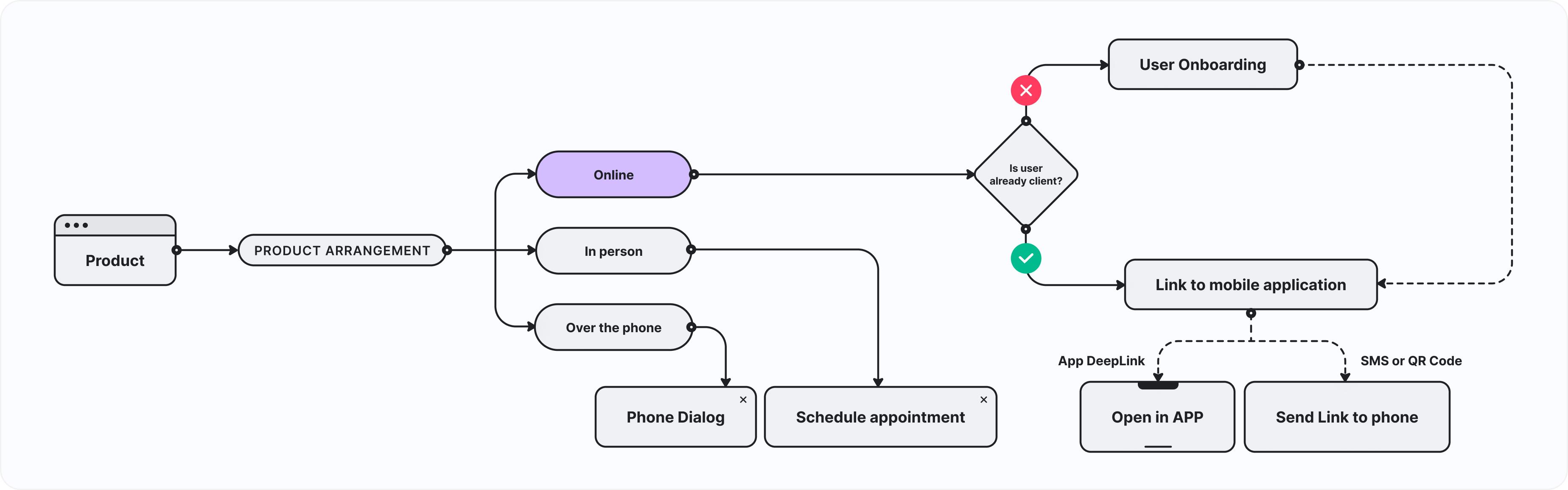
Moneta offered 41 products that could be arranged online — each with its own flow, its own steps, its own logic.
The solution ran through the mobile app. Because security verification - document scanning, identity checks, biometric confirmation was already solved there, it became the natural completion point for online arrangements.
The web guided users through discovery and decision; the app handled the identity layer. That split let us design each channel for what it did best, and gave users a path that felt fast.
Design Decisions
Moneta's website served two fundamentally different audiences — retail customers and business clients — but the navigation treated them as one. Products blurred together, offers overlapped, and business users had to dig through content built for personal banking.
We separated the business and entrepreneur section into its own distinct experience. Navigation was restructured so each audience landed in the right place immediately, with offers and product hierarchies built around their actual decision context rather than shared pages that served neither well.
The most visible design decision was color. We used dark mode for the business section and light mode for retail — a clear, immediate signal that you've crossed into a different product world. It made the separation feel intentional rather than just structural, and gave the business section a tone that matched how corporate clients think about a banking relationship.


Design System
The web, mobile banking, and internet banking teams had each built their own design foundations independently — leading to inconsistencies in color, typography, assets, and component logic.
I consolidated these into a single foundational file covering colors, typography, logos, and shared assets. On top of that foundation, I built the web design system for Liferay CMS.
This wasn't just a handoff artifact — it was a structural decision to reduce future design debt across the entire digital ecosystem. It was the most under-appreciated part of the project at the start and the most impactful part at the end.

Impact
80+
Components built
Fully documented in Figma
100+
Unique sections
Covering all five subwebs
8 mo
End-to-end delivery
From kick-off to full launch (before AI)
Testimonial
“Working with Petr on the major web redesign project for Moneta Money Bank was an absolute game-changer. His incredible skill in Figma prototyping and in a design system UI made a big impact. Petr worked closely with developers, ensuring key components like tokens, forms, and validations were perfectly set up. He's always reliable, on time, and consistently delivers pixel-perfect work.”
Reflection
A project at this scale teaches you that the most valuable discovery work happens in conversations that can't be automated — the stakeholder interviews with the insurance product owner, the mortgage specialist, the compliance team. Generic data tells you where people get lost; those conversations tell you why.
What I'd do differently: make the case for design system consolidation earlier and louder. The business value of a shared foundation compounds over time — but it took until mid-project for stakeholders to see it. I'd push for that conversation in week one.
What I learned: reframing the problem from navigation to content clarity saved the project from a costly misdirection. The research data told one story; the synthesis told a different, more important one.
What stays open: long-term measurement of conversion and self-service task completion — the true test of whether the redesign delivered on its promise to users.